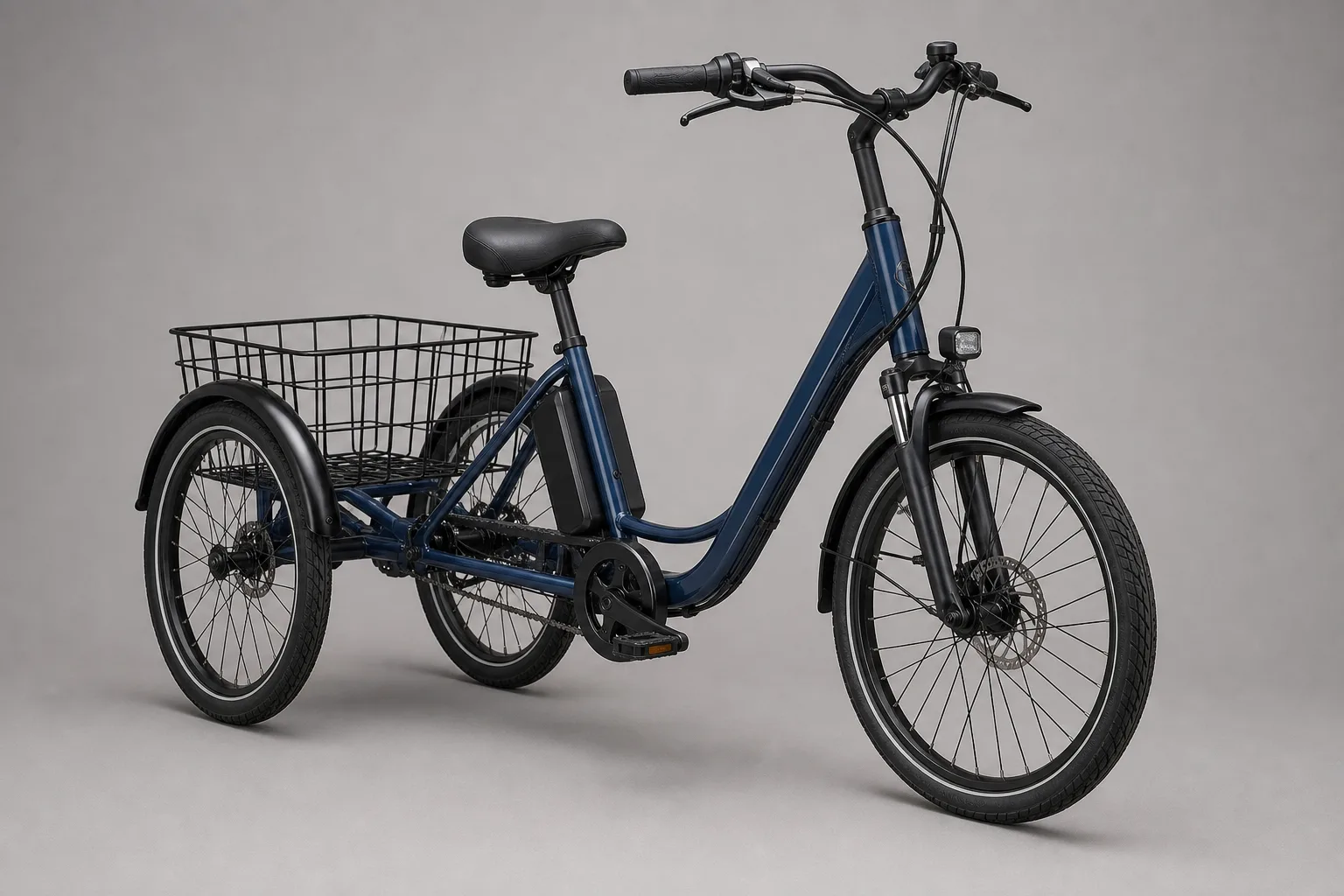
An adult three-wheeler with a hub or mid-drive motor sits in an odd spot in traffic law: almost every state statute that governs it was drafted with a two-wheeled bicycle in mind, and the word trike rarely appears. That is usually good news, because a trike that meets the operable-pedals and top-assisted-speed tests is generally treated as a bicycle, with the same access rights and the same obligations. The complications are practical rather than legal. What follows is the sequence a careful buyer works through before spending money, in the order the questions actually arrive.
1. Which assist class the machine is built to
Most states have adopted a three-tier framework, and the tiers are worth knowing by heart. Class 1 provides assistance only while the rider is pedaling and cuts out at 20 mph. Class 2 may be propelled by a throttle without pedaling, also cutting out at 20 mph. Class 3 is pedal-assist only and continues to 28 mph, and it is the class most often barred from shared paths and most often paired with a helmet requirement or a minimum age. A trike sold as a mobility-oriented machine is typically Class 1 or Class 2, and the label on the frame is the document a police officer or park ranger will look for.
2. Whether the motor rating clears the wattage cap
The common statutory ceiling is 750 watts, a figure inherited from the federal definition of a low-speed electric bicycle, and it refers to the manufacturer's continuous rating rather than peak output. The Consumer Product Safety Commission is the federal agency responsible for the safety standards that govern bicycles sold in the United States, and its definition is the reference point most state legislatures borrowed. A trike advertised with a 750-watt nominal motor and a 1,200-watt peak is normally still compliant. One sold as a 1,500-watt continuous machine is normally not, whatever the seller's listing says, and it may be reclassified as a moped or motor-driven cycle.
3. Where sidewalks and multi-use paths sit
This is the layer that varies most, and it varies below the state level. State code usually grants local authorities the power to restrict electric bicycles on sidewalks, greenways and park trails, and many of them use it. A rail trail managed by a county parks department may allow Class 1 and Class 2 while excluding Class 3; a beachfront boardwalk may ban all motorized assist regardless of class; a city may permit sidewalk riding outside a downtown business district and prohibit it within. The rule that matters is the one posted at the trailhead, and the practice that matters is what the managing agency actually enforces. Checking both before committing to a commute route is cheap and saves a rerouted year.
4. Whether the trike fits the infrastructure
No statute imposes a width limit on a bicycle, but bollards, chicanes, kissing gates and trail entrance mazes do. Adult trikes commonly run somewhere between about 28 and 34 inches across the rear axle, and cargo models go wider. Standard bicycle bollard spacing and the clear width of many park gates were set for a two-wheeler and a stroller, not a track-width machine, so a rider should measure the trike's widest point, then measure the pinch points on the intended route. Striped bike lanes are usually accommodating enough. Protected lanes with curb separation, and the gates at either end of a bridge path, are the ones to scout in advance.
5. Whether registration, plates or a license ever apply
For a compliant electric trike within the three-class system, the answer in almost every state is no: no title, no plate, no annual registration at the DMV, and no driver's license. A handful of states impose a minimum age or a helmet mandate for Class 3, and a few require registration for machines that exceed the wattage or speed caps, at which point the vehicle has left the bicycle category entirely. Canadian provinces run a parallel but separate system, generally capping assist at 32 km/h and 500 watts, which matters to anyone riding cross-border. Liability coverage is a separate question worth raising with a homeowners insurance agent, since some policies extend to a bicycle and some draw the line at a motor.
The through-line is that a trike built to the class rules inherits a bicycle's legal standing, and the remaining work is local: read the frame label, note the continuous wattage, call the agency that manages the path, and carry a tape measure to the gate.